Published
By three in the afternoon, people were already stationed beside the entrance. Alicante had reached that temperature where sweating and breathing feel equally natural, and there they stayed, pressed against the wall, clinging to a sliver of shade, waiting for a door that would not open for another five hours. Many had come from the islands, seemingly made of some indestructible material when it comes to things like this. True survivors, ready to endure whatever it took for the chance to kiss the front row. That coveted spot came at a high price, an exorbitant one, paid quite literally with the sweat of your body and almost your soul.
The week was already running hot after two dazzling shows in Cádiz and the live debut of two new songs, delivered point-blank, open-handed and without warning: the Fontainers’ Instagram accounts were a hornet’s nest.
Hours later, El Muelle Live was sold out without ever feeling suffocating. At least near the front, the crowd was young, very young: many were in their twenties and had come from elsewhere. British, Irish and other followers had travelled here specifically. Calm, friendly, perfectly at ease with the surroundings, the city and the venue, they maintained a strange serenity. They surprised me.
La Milagrosa appeared on time—take note—and with a striking naturalness. Loose, showing no trace of pressure or discomfort before a packed venue full of people who had not come for them. Technically impeccable, resourceful, brazen and mischievous. They are not exactly my kind of music, but they stirred my curiosity: behind that innocent pop-rock exterior lurked something more electric, something sharper, difficult to explain and still somehow magnetic today. Holding on to that attitude and swagger before a borrowed, impatient crowd that speaks another language takes nerve, and plenty of it.
Fontaines D.C. kept everyone waiting for fifteen minutes, in case anybody still doubted who was in charge. At 10:15 p.m. they appeared, and “Boys in the Better Land” brought the wait to a crushing end.
When the first song ended, Chatten climbed onto the riser. And there he stayed. Still.
He narrowed his eyes above the heads and began reading what lay before him. He did not ask for applause or shout the city’s name. He was looking for blood. Who had come to fly and who to stare at their phone, which side would split first, how large the feast might be, how much there was to bite.
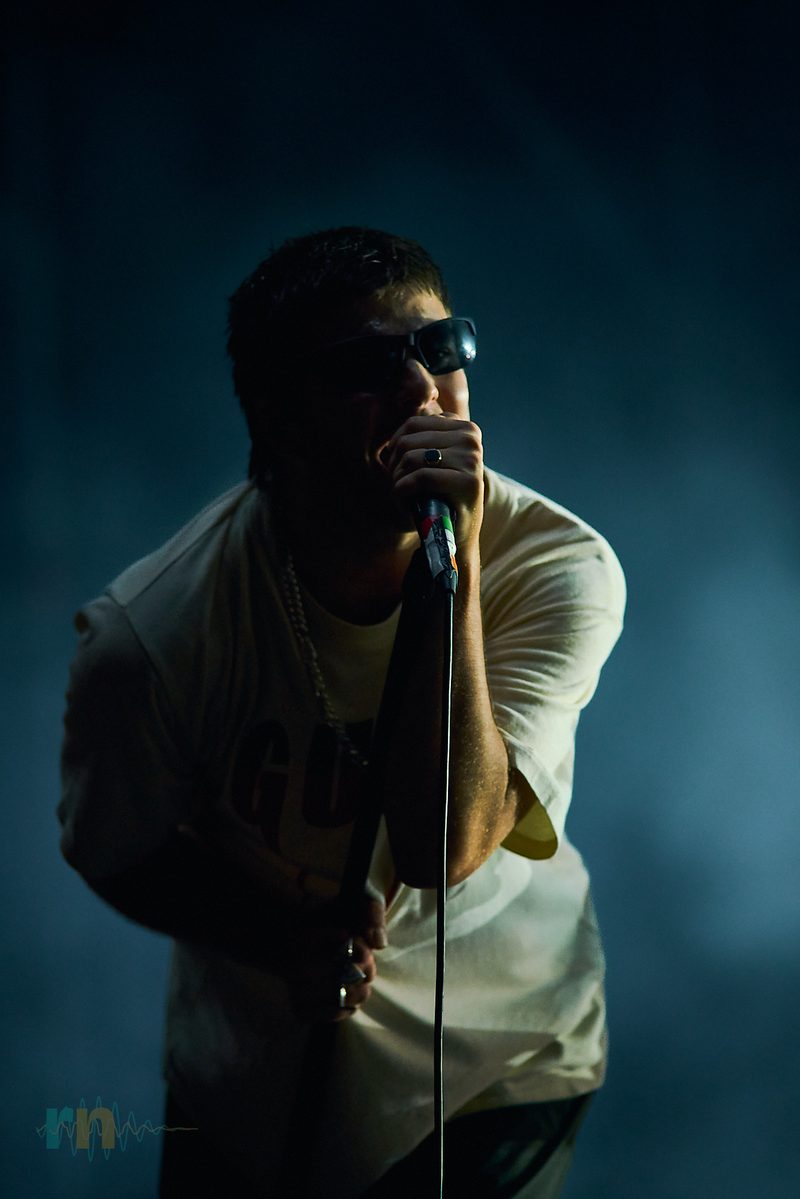
On the page it looks simple, natural. You try it. Most people cannot stand that moment: they fill it. Smile, ask for clapping, turn around, stare at the floor, do anything with their hands to avoid being alone in front of several thousand people. Filling the silence is the easy way out, and it almost always works. Standing still is not.
Fourth minute of the concert. Nothing had happened yet, and everything had already been said.
From there, the sound. Impeccable, extremely loud and crystal clear. No instrument towered above the rest; none was buried. There was no initial feeling-out process, none of those two or three songs some bands need to find the sweet spot with the sound engineer while the paying crowd dutifully picks up the bill: they came out with the sound fully built, sharpened and ready to use. Jumps, screams, choruses, adrenaline. Nobody was waiting for things to improve, because they had already begun at full height.
But one of the night’s greatest achievements was that its intensity did not depend on speed. The set alternated its most energetic songs with its quieter ones while preserving the emotional balance throughout. Some bands bog down in their slower territory: the concert turns swampy, the lower revs pull you out of the ritual of a good live show, and then it takes three songs and a few drinks to regain the lost ground. Fontaines D.C. could slow down without easing the tension. Much of the credit belonged to Chatten, capable of drawing energy from the most measured passages: from a gesture, the way he spat out a line, the way he glided across the stage. The music lowered its pulse; he did not.
Behind him ran a well-oiled machine. Barely a few seconds between songs. No uncertain glances, no searches for approval, nobody improvising what came next. Everything measured and internalised. It spoke of many hours of rehearsal and of something more important: ambition. What I saw in Alicante was a band that wants to fill stadiums and is preparing seriously to do it. Not through campaigns, viral videos or mountains of likes, but through songs, attitude and craft. I did not see a band wondering whether it was ready to make that leap. I saw a band rehearsing how to make it.
A band like that no longer breaks. What I still do not know is whether something that cannot break can keep biting.
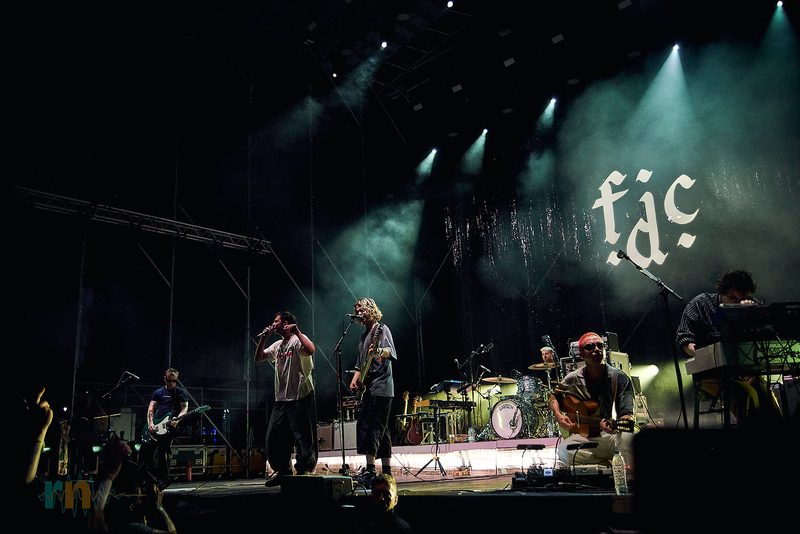
Visually, everything was restrained and fairly classic, with a certain eighties air. No giant screens, no music videos, no avalanche of effects determined to explain what the audience was supposed to feel. The band’s initials presided over the rear of the stage while the colour shifted around them. The lighting, however, was meticulously worked. Every change seemed to answer something happening in the instruments, the voice or around the microphone. This was not lighting designed to show off lighting, a national sport in which half the industry competes. Restraint is not poverty when everything on display serves to illuminate what is happening below. Only the truly great turn down photogenic confetti.
There were different degrees of expressiveness among the musicians, and I missed seeing more of Tom Coll. The drummer was hidden too thoroughly, living under witness protection. Personally, I like seeing drummers on the battlefield: watching them strike snare, toms, kick and cymbals, watching the physical work that sustains and drives so much of what is happening through sheer force. It was not a musical problem—his execution was beyond question—but it was a visual absence.
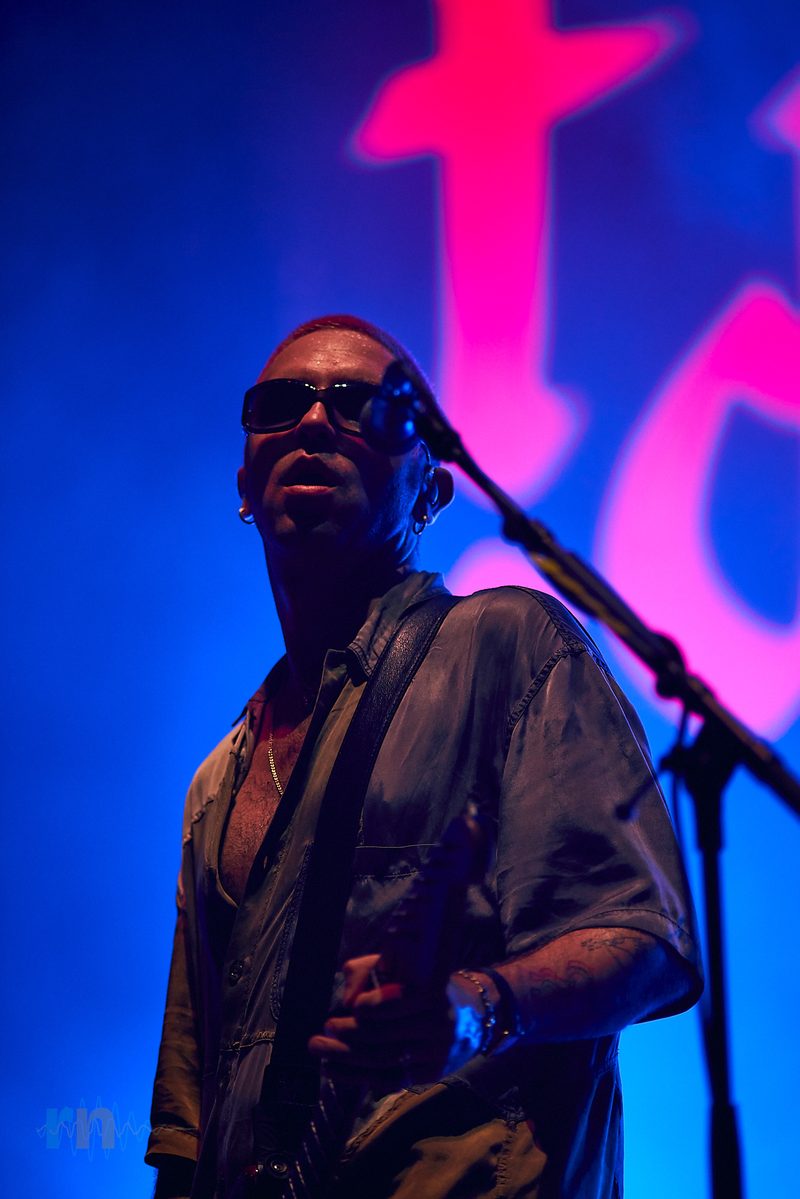
The set reached nineteen songs and added “Roy’s Tune” to the structure presented in Cádiz. It also reserved a prominent place for the two new tracks, “Marianne” and “Six Shot Morning”, responsible for much of the noise surrounding those days. Both still sound unmistakably like Fontaines D.C., but they do not point in the same direction as everything else: atmospheric, elaborate, progressive and compositionally deep. They gain density and emotional weight as their layers accumulate. In exchange, perhaps they lose some immediacy and spark. That need not be good or bad; moving means drawing closer to some things and farther from others. We will have to hear the final studio versions, but onstage they left this first impression: they are still Fontaines, though a Fontaines who seem to need more room to say what they have to say. Growing also means that: buying more square metres and exploring new territory.
The encore compressed the entire concert into three songs: “Six Shot Morning”, “I Love You” and “Starburster”. It was not a bonus or an appendix; it was the summary. The first note of “Starburster” was enough to tear a roar from the venue, and there was nothing left to search for: the animal was wounded, bleeding and surrendered. Chatten went for it.
That was where they finished emptying themselves. And where we finished emptying ourselves, without recriminations or excuses. Ninety-five minutes that felt neither long nor short: they felt eternal. The concert ended as it had begun, at the top.
And there lies one of the great differences between a festival and a band’s own show. A festival always has curious onlookers, accidental spectators and people waiting for the next artist with the look of someone completing a chore. In Alicante, nobody was passing through. The band, the musicians and everything breathing around them had come to play the same game.
On that stage stood a solid, precise, perfectly engineered band. And in the middle, prowling, something that did not quite fit with so much precision.
Chatten did not sing the songs: he dragged them through his entire body. He walked, stalked, bit into the verses, stopped and moved again like someone who knows every boundary of his cage and keeps searching for the place where it might break. Even in the slower songs, he sustained the threat, that sense that something could happen at any moment and that the stage, the venue or the city itself had become too small for him that night.
I have seen that kind of authority in musicians who have spent decades at the top. Nick Cave, Brett Anderson and Alex Kapranos have had time to learn how to use every gesture, every pause and every available inch. Chatten is 31 and has spent only six or seven years climbing onto stages more than a metre high. He still has half a career in which to acquire that authority, yet already spends it as though he inherited it.
Everything had been announced from that riser. He did not come out that night to be liked: he came looking for blood. And we gave it to him, but not to just anyone and not at any price.
I do not know whether Fontaines D.C. will fill stadiums. After Alicante, it is difficult to imagine that they will not. It makes no difference. Something simpler remains from that night: inside that perfectly calculated band lives a thing that has not yet been domesticated and has no intention of being.
And it is hungry.