Published
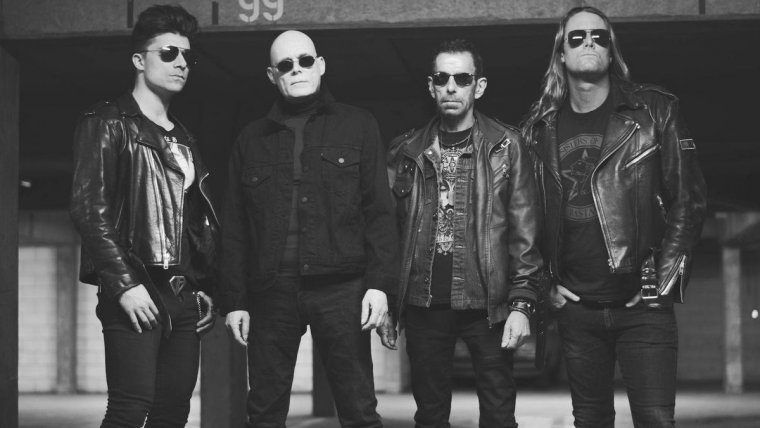
Some bands survive by keeping up with the times and going with the flow; others travel through the time and space of this musical universe without offering too many explanations. The Sisters of Mercy clearly belong to the second group. From Leeds, Andrew Eldritch has built one of dark rock’s most enduring mythologies: three studio albums, a drum machine turned phantom member, tonnes of smoke, hypnotic basslines, taut guitars and a relationship with the present that is exotic, to say the least.
The official story rests on a catalogue that is brief but immense: First And Last And Always —1985, Merciful Release/WEA—, Floodland —1987, Merciful Release/WEA— and Vision Thing —1990, Merciful Release/EastWest—. No new studio album has followed. And that is where one of the Sisters’ great peculiarities begins: few bands have built such a solid presence on such a long stretch of recorded silence. The usual fate would have been to become exhibits in some fabulous gothic museum. The strange thing is that they still operate like an old machine that continues to give off heat and has a soul.
Granada also welcomes them at a particularly interesting moment. In March, Czech festival Brutal Assault announced that The Sisters of Mercy were cancelling their appearance because the band had brought forward the recording schedule for their new album. Stop the presses: there is no date, no title and no firm confirmation of a release, and we do not even know precisely how far the Czech festival’s public explanation goes. But we know how this works: the fact exists, and that is enough to stir one of alternative dark rock’s great mysteries—the possibility that, after more than three decades, Eldritch might genuinely return to the studio.
While that record may or may not cross into the realm of reality, the live show remains the only thing to hold on to. For years, the Sisters have been adding new songs that have never appeared on an official album but have already become part of the band’s recent language: I Will Call You, But Genevieve, Eyes of Caligula, When I’m On Fire, Quantum Baby, Don’t Drive On Ice, On The Beach and There’s A Door, among others, are listed on the group’s own official website as part of a floating repertoire that keeps growing outside the record industry’s logic.
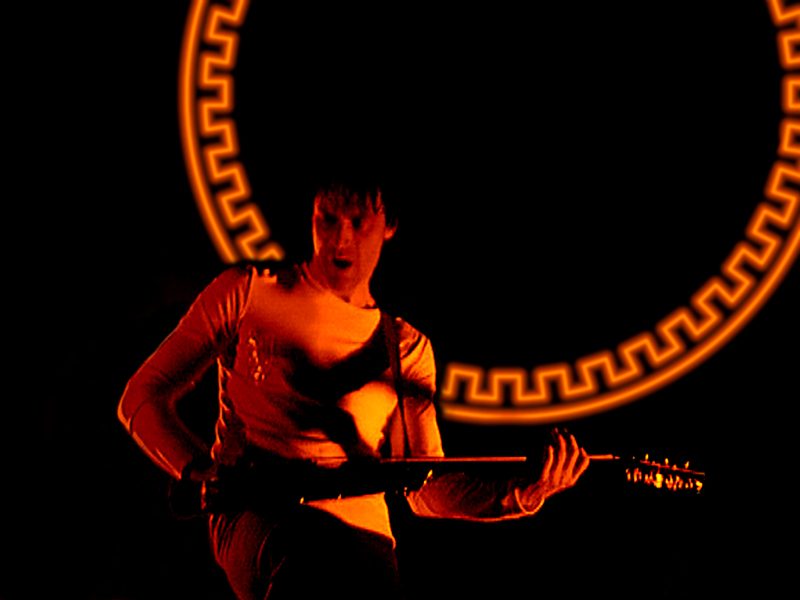
That may be the best way to understand The Sisters of Mercy in 2026: as an exotic anomaly. They still play songs that belong to the emotional underground of several generations—This Corrosion, Lucretia My Reflection, Temple of Love, Dominion / Mother Russia, Alice, Marian, More—but mix them with new material that exists almost like creatures of the live show. They do not release music like everyone else, they do not communicate like everyone else and they certainly do not seem interested in behaving like everyone else.
Their own official website sums it up better than any promotional note: they describe themselves as a rock’n’roll band, a pop band and an “industrial groove machine”; with the same trademark dry humour, they also admit that they make records “sometimes” and play concerts “sometimes”. Some official websites provide information. The Sisters of Mercy’s reads more like a collection of disclaimers.
And at the centre of all this dark singularity remains Andrew Eldritch: voice, image, avatar, a character and a force of nature, surrounded by a sonic architecture that is an essential part of the myth. In other bands, the drum machine would be a tool. In the Sisters, it is almost a totem: a mechanical heart driving songs made of shadow, desire, irony and electricity.
On 26 September, Industrial Copera will welcome both a historic band and a functioning rarity: a group that has turned recorded silence into a way of life and a liturgy, that continues to feed its repertoire outside the usual rules and can still make smoke, bass, voice and machine feel like something close to an exhilarating coven.
Some bands age. Others float in their own limbo.