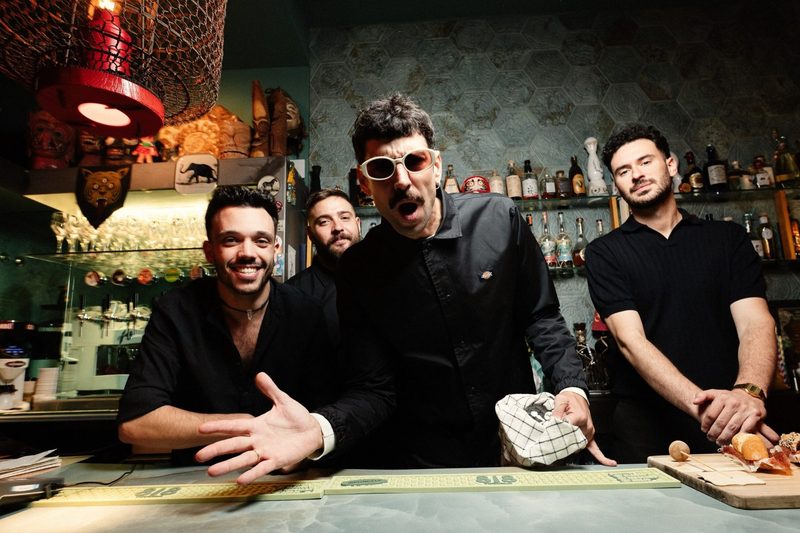
Published
INTERVIEW WITH SERGIO ISABEL (LEVITANTS) - Ruido Necesario
Introduction:
They have just released their best album. On 18 September 2026, Levitants released ¿Qué arderá mañana? (Calaverita Records), their third full-length and their first for the Madrid label after their time with Subterfuge. Eleven songs, almost 50 minutes, produced by Javier Vielba (Arizona Baby, El Meister) and Raúl Pérez at La Mina (Granada).
It looks like the end of a road, but it is really a 15-year journey. We speak to Sergio Isabel, the only original member left since he founded The Levitants in Valladolid in 2011. Almost two metres tall, with a dark, rasping voice, he has gone from singing in English with his sights on Manchester to making what is, without doubt, the best Spanish-language post-punk in the country. This is his story in chronological order, taking in the Madchester Club in Almería and Nico Lounge Pub in Almerimar along the way.
Album details:
Released: 18 September 2026 / Label: Calaverita Records / Production: Javier Vielba + Raúl Pérez at La Mina / Format: 11 songs
PART 1: THE BEGINNING - Why become a musician?
1. Let’s go back to Valladolid in 2011. You form The Levitants. What were you listening to that made you say, "I want to do this"? Joy Division, Interpol, The Horrors?
Sergio: I got into music almost by chance. My first memory goes back to when I was very little, about four or five, and my mother signed me up for piano lessons. But everyone was much older than me, it felt like torture, and I only went to two lessons. Nobody in my family does this.
Then, sometime between 15 and 17, the usual Spanish guitar was floating around the house. One summer it caught my attention and I started playing. That was when I got hooked. From the beginning, I was less interested in the technical side of the instrument than in using it to write songs and express things.
Later, after attending boarding school in Salamanca, I came back to Valladolid to go to university and wanted to start a band. I couldn’t find people with the same interests, so I posted an advert online mentioning influences such as Arcade Fire, The Strokes and The White Stripes. Like something out of a film, Dani replied; he was our drummer throughout the first phase. We met in his parents’ garage on the outskirts of Valladolid. I brought my guitar and an acquaintance who had just bought a bass, and he brought a friend who played guitar.
Within barely three months we had recorded a demo and started sending it around. We won a couple of competitions, and our second gig was already away from home, at a contest in Cantabria where La M.O.D.A. also played and ended up winning. Being that young and getting on a big stage outside your own city, playing your own songs, was the spark that really got us hooked.
Valdi: Did you never play any covers?
Sergio: Yes, but we didn’t start out like the typical bands that use them to fill out a set because they don’t have enough material of their own. We wrote songs very quickly, and our first gigs were competitions or short support slots of about 20 or 30 minutes, so we soon had enough songs.
Over the whole of Levitants’ career, we’ve probably played barely four covers live, always simply because we liked them: Regular John by Queens of the Stone Age, Just Like Heaven by The Cure, Red Morning Light from Kings of Leon’s first album and, during the pandemic, the version of Britney Spears’ Toxic that we recorded. All the others were exclusively for live shows.
2. You were the singer, guitarist and songwriter from day one. Did you see yourself as a bandleader, or was it something forced on you because nobody else wanted to keep things moving?
Sergio: People always equate the singer with the leader, but at first it was much more evenly shared. Dani and I were the ones with the most ideas, driving the project forward, although we then worked on everything together. When we became a trio, I kept bringing all the lyrics and vocal melodies from home so we could develop them in the rehearsal room. It was a collective process, a pretty complicated exercise in democracy that worked for us for a while. In this last, Spanish-language phase, as members started leaving, and especially after Dani’s departure, that responsibility fell to me. I never rejected it, but I didn’t embrace it either; it happened naturally because we had to keep going.
Valdi: But the lead vocals have always been yours, haven’t they?
Sergio: Yes, apart from one occasion. On the last song we released in English, we tried having Juan sing. He was our keyboard player at the time, and I did the backing vocals. A lot of people don’t know because his range is very similar to the one I used back then, but it is the only recorded song by the band with someone else singing.
3. Your first release is almost mythical: Gravity for the Masses (2013), self-released and out of print, at Dobro Estudios with Javier Vielba already involved. What remains of that Sergio in the one who made ¿Qué arderá mañana?? Are you embarrassed by it, or do you stand by it?
Sergio: I think there are quite a few similarities, because some personality traits don’t change. I have always been restless, effervescent and curious, both in music and in life, and that willingness to take risks, to be a little crazy, is still there. Ultimately, the same person is recording the guitars; however much I’ve learned and evolved, people who have followed me from the beginning tell me they hear flashes of Gravity for the Masses on this album.
It is true that it is almost impossible to find that record now because we deleted it everywhere. I have never been ashamed of it, but it was a band decision at the time. We won the Norte Rock competition in Castilla y León, and the prize was recording and releasing an album, so we did it in a huge rush and with huge enthusiasm. When we finished, we felt we had evolved very quickly into something else and that it no longer represented us. I’m a little sad it isn’t available, but it was a collective decision made with bandmates who are no longer in the project, and I don’t think I should reverse it on my own; sometimes you have to leave things as they are. Even so, a lot of that early anger and curiosity has come back in this Spanish-language phase.
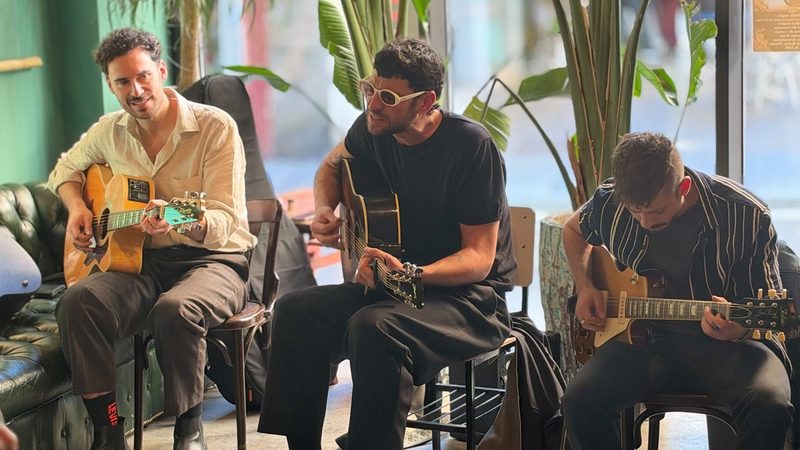
PART 2: THE ENGLISH-LANGUAGE YEARS - Bazar and Subterfuge
4. Coimbra (2016, Bazar Records). Recorded at La Leñera. It was a very Anglophile record, very Interpol / Editors. Why Coimbra? Why English?
Almost every song I write has a strong autobiographical element. Coimbra came out of a fairly intense period I spent in the city while my ex-partner was there on their Erasmus exchange.
I soaked up a lot of music during that period. Although I was listening to somewhat darker sounds, such as The Cure, I hadn’t yet really explored bands like Editors or Interpol; I was actually looking into other, earlier sounds. Curiously, I only started listening to them properly later, largely prompted by people who heard us and said we reminded them of those bands.
I became curious about who Interpol really were, and they have been a big presence for us ever since. It is very funny because when I’ve gone to see them live in Madrid, quite a few people have said to me, ‘To me, you’re the Spanish Interpol.’
5. Then comes Enola (recorded in 2018, released in 2019), already with Subterfuge. That is when things take off: a sold-out Sala Sol, Sonorama’s Plaza del Trigo, a place on the Mad Cool line-up, Paul Banks praising you on Radio 3 as "unique and incredible", an English tour on the horizon... What was that moment like, and how did the pandemic cut it short?
Sergio: At the time, we were taking everything very much day by day and weren’t aware of what was happening. In hindsight, it seems like a bigger turning point because the pandemic arrived so soon afterwards, and everything that might have happened was left by the wayside.
We had a tour with dates in England booked, we had been playing some really good festivals, and we had been invited to the Plaza del Trigo. We had also sold out Sala El Sol and were close to doing it again at other venues outside our immediate area, seeing people come specifically to see us, which is an amazing feeling. It was definitely the moment when the band established itself on the underground scene. Singing in English in this country is always difficult, but it was a really great period, and it was such a shame to have it stopped because things were looking very promising.
6. At that point you were a trio: you, Dani (drums, the digital dandy) and Juan (synths, the virtuoso raccoon), as you were described. What happened to that line-up? Why did it break up?
Sergio: We had been together since 2011. Juan joined a little later, just after we finished recording Gravity for the Masses, to help us adapt some keyboard parts for guitars on a short tour of Galicia. He fitted in brilliantly, and after various departures we were left with Dani, Juan and me, the three of us who recorded Coimbra and Enola.
After the pandemic, though, differences emerged, both musical and personal: they lived in Madrid, I lived in Valladolid, and we each had different ideas about songwriting. In the summer of 2022, Juan decided to leave. At first, Dani felt that without the three of us the project didn’t make sense, but a fortnight later we met again. We had both been there from the start, we really missed it, and he liked some demos I had ready, so we decided to try again.
There was one thing I was sure about: I needed a change, and I wanted to start singing in Spanish. We had started in English out of habit because that was the music we listened to as kids, and although I put a lot of work into the lyrics and am proud of them, I felt I was missing a direct connection with the people who came to see us here. Besides, if you aren’t touring abroad or living with the language every day, it starts to make less sense.
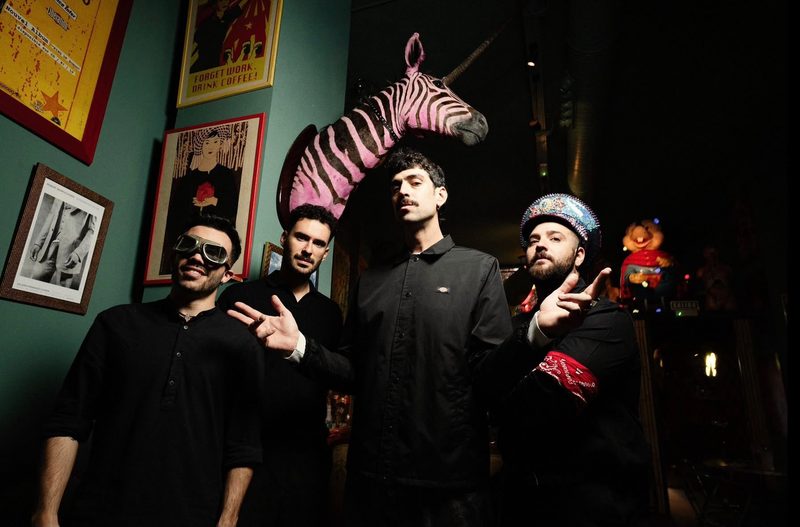
PART 3: THE TURN - Spanish as a revolution
7. 2022. You decide to switch to Spanish. For many bands that is commercial suicide; for you it became Futuro Inmediato (2023, a seven-song EP with Carlos Hernández Nombela) and hits such as "Adelante", "Vámonos" and "Sofisticado". Did you need people to understand you, or were you escaping the English-language pose?
Sergio: When you change language, you normally take a big hit because the audience expects one thing and you give them something completely different. Before releasing Adelante, though, we had already put out two songs, Nuevas generaciones and La ventana, to make it clear that singing in Spanish wasn’t just an experiment, but a real evolution. Once Adelante came out and we went on tour, we began to notice the rooms filling up and our long-standing audience from the English-language years mixing with new people who had connected with this new phase.
I remember one of our first Spanish-language shows, at a theatre in Málaga, with great amusement. Some guys who had seen us before in Torremolinos came over and said, ‘Hey, now that you’re indie...’ I found it very funny that simply changing language and adopting certain nuances was enough for people to give us that label. With our new album, ¿Qué arderá mañana?, I feel that renewal is finally complete. Right now, our live set is focused exclusively on our songs in Spanish; nobody asks us for the old English songs any more. I don’t know whether we’ll return to them in the future, but for now we prefer to live in the present.
Valdi: So your current set essentially revolves around your two latest albums, El futuro inmediato and ¿Qué arderá mañana?
Sergio: Yes, exactly. We’re also trying out some new songs that we’ll record soon, but the tour is about presenting ¿Qué arderá mañana? alongside what we consider our greatest hits from the previous Spanish-language phase, such as Adelante, Vámonos, Nuevas generaciones, Sofisticado and Uno de los nuestros, which we alternate depending on what each show calls for.
Valdi: In fact, Sofisticado isn’t part of Futuro inmediato, is it? It remained a standalone single without a physical release.
Sergio: Exactly. After Futuro inmediato, we spent a while recording standalone singles with Carlos Hernández. We recorded six tracks, four of which have come out, with a couple still held back. They worked as transitional songs and didn’t go on an album. We considered including Sofisticado on ¿Qué arderá mañana? because it fitted this phase, but in the end the album’s eleven songs had a very clear sonic unity of their own. Even so, we haven’t ruled out gathering all that standalone material together later for a special vinyl edition, a format we love.
8. Was writing in Spanish difficult? Your voice has always sounded very British. Is it harder for you to write in Spanish or in English?
Sergio: The transition to Spanish was a long process, and much more demanding. Having studied speech and language therapy, I have great respect for language, and it took time to adapt that British, Anglo-American sound I grew up with to our language, as English lends itself much more readily to rock. But once you make the move, the experience is millions of times more rewarding. Ultimately, I’m not bilingual; I’m a guy from Valladolid, the cradle of Castilian Spanish, and it was the most logical thing to do. Right now, going back doesn’t cross my mind.
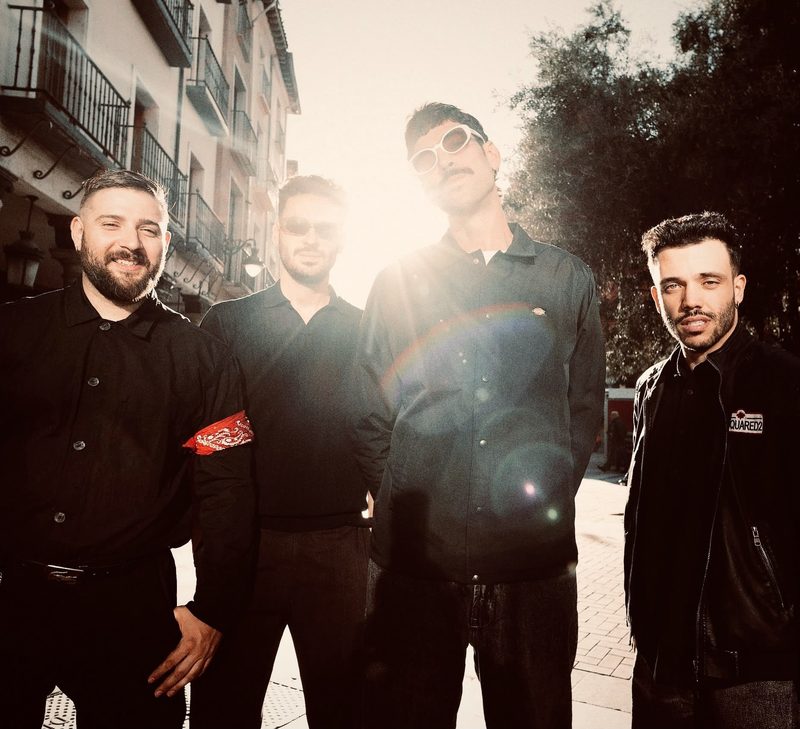
PART 4: THE PRESENT - ¿Qué arderá mañana?
9. Your third album (fourth if we count the deleted one), and your first with Calaverita Records. From Subterfuge to Calaverita. What were you looking for in a label that Subterfuge was no longer giving you?
Sergio: Well, in the end it’s a bit like a relationship. Making music in this country while living outside Madrid has a significant drawback: you don’t have regular personal contact with the people you work with. That is why most bands end up moving there, although we have always resisted it. We reached a point where we felt the previous phase had run its course. Nothing particularly bad happened; the relationship had simply come to an end, and we needed a change so we could start afresh with renewed energy.
Our manager played it to several labels, and Calaverita was one of the first to hear it. We had a meeting, found we understood each other really well, and decided to go ahead.
We’re really happy because, beyond connecting with the songs, they have fully supported the visual and design side, which is fundamental to us. They backed releasing the album in a gatefold sleeve, on coloured vinyl and with embossed titles: details that make production much more expensive, and not everyone is willing to take that on. They even joined in with the madness of including customised lighters for the most devoted fans. Ultimately, a good record label’s job is to look after the physical format and make it attractive, and in that sense they have given us complete freedom. We felt it was time to close one door and open another, and the change has been completely worthwhile.
10. You’re working with Javier Vielba again, this time as producer alongside Raúl Pérez at La Mina (Granada), in the summer of 2025. Vielba doesn’t just produce; he adds synths, keyboards and backing vocals. Has it felt like coming full circle from that first Gravity in 2013?
Sergio: As well as being a close friend and a producer from our city, Javier is someone I’m in touch with almost every day. We constantly share music and have a lot of interests in common. Working together again was almost inevitable. He produced our first album, Gravity, when both he and we were starting out. Now we have both developed a lot, we have more experience, and he understands exactly where I want to take the band’s sound.
For this new album, I felt the need for an outside perspective and some proper pre-production, something we hadn’t done before because we would go straight into the studio and work the songs out as we recorded them. I wanted to take time to prepare the songs before bringing them to the rehearsal room with the band and going in to record, and Javier’s name kept coming to mind.
Funnily enough, a week before I asked him, he told me he wanted to focus on his own projects because he was overwhelmed with production work. I thought, ‘Just wait until I ask you next week to produce our record.’ In the end we met, I showed him the ideas and sketches I had, even though I still needed quite a few songs to complete the album, and I managed to persuade him, so we got to work. I’m very happy with the result because I think his contribution has helped us enormously.
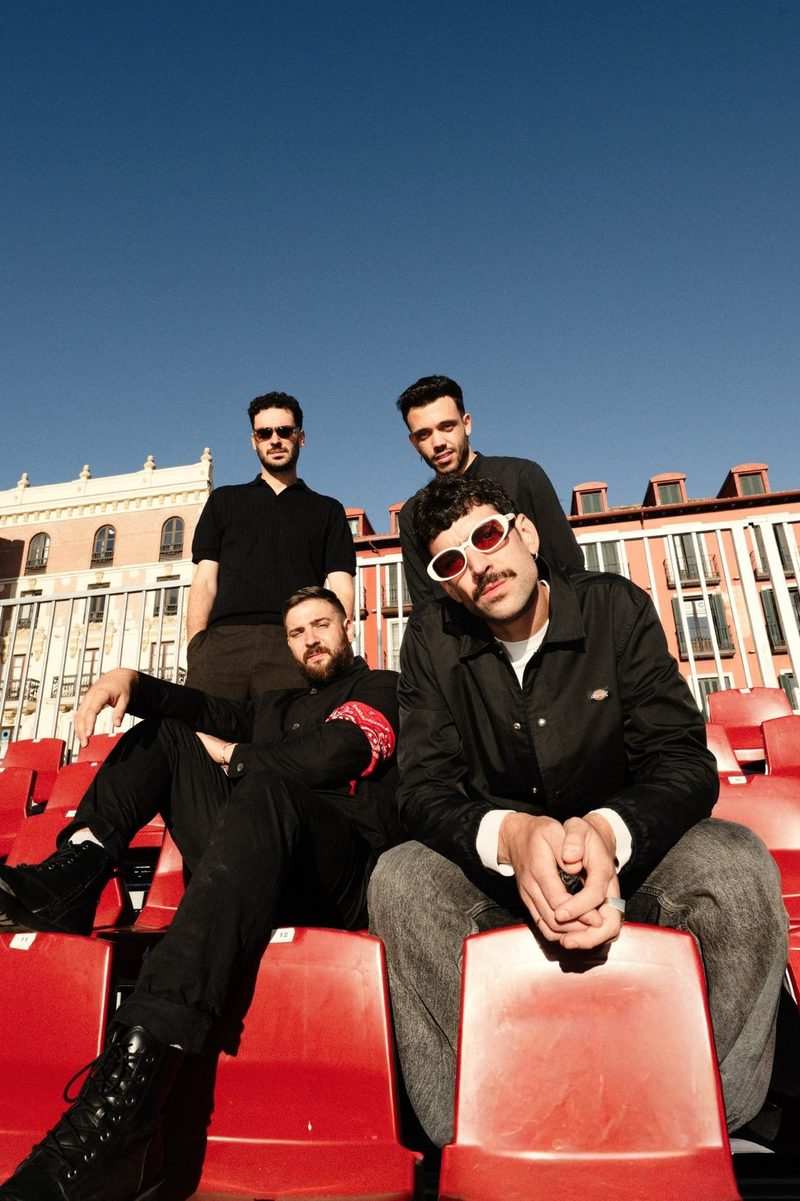
11. You’re now a four-piece: Marcos Merillas on bass (whom you "made" join), Sergio Arconada (jazz from Donosti) on guitar and Pablo Sanz (a luthier who hadn’t even heard you) on drums. What does each bring that you didn’t have before? It really shows on "Pechocuchillo" and "TRUE CRIME".
Sergio: Pablo Sanz is no longer with us; Carlos is playing with us now, a guy from here in Valladolid who is the youngest of us all, and he is the one who recorded ¿Qué arderá mañana?.
We had already had changes in the studio on earlier records, though. When it was just Dani and me, we got the project back on its feet thanks to Álex Izquierdo, Ángel Stanich’s bass player, who is also from Valladolid. At that point I had recorded all the guitars for songs such as Nuevas generaciones, La ventana, Seres de luz and Paladín, and I had the bass lines in mind, but we said, ‘Why should I record them when a real bass player’s touch is incredible?’ So he came in with us, we looked at how I felt the songs should go, and he recorded those four tracks before Marcos came in to handle the rest of Futuro inmediato, such as Adelante and Vámonos.
Valdi: One track that particularly stands out on this last album is True Crime, because it is quite different from the rest. How do you see that change of direction within the record?
Sergio: I think it is a very eclectic album. If you’re looking for a single, clearly defined style from the outset, this isn’t that record. To me, what really matters is that it establishes a band’s identity regardless of the genres or styles we work with. True Crime has very Manchester-style rhythms with bongos and an almost rap-like cadence.
What’s interesting is broadening the palette, taking in the whole landscape and enjoying it. I really like bands that are willing to take chances and aren’t afraid of getting things wrong or stepping outside the lines a little. There is a lot of trying new things on this record: Señales, for example, uses a different tuning from anything I had used before, and although you might not notice it straight away, I would never have written it without changing that tuning. Or Muerte a la española, which has an almost Prodigy-like drum foundation mixed with echoes of a more traditional Andalusia.
Valdi: That eclecticism makes it a very complete album, although today’s rapid consumption through platforms and playlists means many people just hear a couple of individual songs without listening to the whole record.
Sergio: Absolutely, and that’s why people now say we make pop. Look: they used to say we made post-punk, then indie, and now, with this record, apparently we make pop. Those of you who listen to whole albums know how much depth there is, but many people discover Levitants and go straight to the two songs with the most plays. Of course, if you put on Introducción al baile, it is acoustic-guitar Britpop, and it’s obvious that it will sound like pop to you. But I find it very funny that people give us that label when the album has songs such as Alta tendencia, La cena, Muerte a la española and Pechocuchillo. Still, in the end it is all a matter of perspective, and pop encompasses everything.
PART 5: INFLUENCES AND ALMERÍA - The personal question
12. I want to take you somewhere very specific: Almerimar and Nico Lounge Pub (the Jaleo building at the marina). A few years ago you played there in a very small setting, far from the Madrid-Barcelona-Valladolid circuit. By the way, Nico is a great friend of ours and a great person. What connects you to Almería, and specifically to Almerimar? How did a band that had just played the Plaza del Trigo end up playing Nico’s bar? Tell us about that night.
Sergio: Almerimar came about because my wife is from El Ejido. On one of our visits to her family, we were talking to Nico, and one thing led to another; it was a spur-of-the-moment idea. He told us to come and play there, and we agreed on the condition that he would promote it locally. In a big city, there are always more people who might know you, whereas in a small town the audience tends to be used to other things and it is a little harder if you aren’t a local band.
But we went for it and put together an incredibly intense weekend route: Granada on Thursday, Almerimar on Friday, then two shows on Saturday, playing in Málaga in the morning and Murcia in the afternoon. It was a full-on weekend. In fact, I was very sad to hear the place burned down not long afterwards, although I now know they have restored it and it is up and running again by the beach.
Valdi: When our friend Nico told me you were coming to play his place in Almerimar, I could hardly believe it, and I was there to see you.
Sergio: That’s great that you were there! The truth is we tour a lot and love being on the road. We really don’t mind playing to two hundred people in a venue one day and fifty in a little place the next. We don’t make a fuss, and if someone suggests a good plan, we’re very much the sort to say, ‘You wouldn’t dare,’ and throw ourselves into it.
13. Officially, you played Almería city on Saturday 21 December 2019 at the now-defunct Madchester Club, and you were announced for Cooltural Fest in August 2020 alongside Leiva and Arde Bogotá, which couldn’t happen because of the pandemic. Now that ¿Qué arderá mañana? is out, would you like to return to Almería and make up for that Cooltural appearance we never got?
Sergio: Yes, in Almería we played the Madchester venue shortly before it closed or changed its name. I remember it being a really lovely place; I liked the layout a lot. It had that character of a legendary venue, one that friends in other bands had already told us about. It was a distinctive place, and we’re very proud to have played there.
Valdi: Yes, it no longer exists. A group of friends set it up, including a good friend of ours, Adrián Buendía. In the end they closed it down.
Sergio: As for Cooltural Fest, it was one of those things left in limbo by the pandemic. We had a verbal agreement and had even been announced on their social media, but nothing had been signed. A lot of new bands emerged during those two years off, and when the festival returned its programming had changed, so they didn’t call us again. Hopefully they’ll be up for it at some point, because we would be delighted; coming back to play Almería always feels very close to home for us.
Valdi: Down here in the south, the nearest date on your schedule is Málaga in February 2027. When will there be a date in Almería?
In February we play Málaga and Sevilla, then Murcia. Hopefully someone will call us from Almería, although I think some of the venues there are still a little big for us. I’d love to take that step and play Sala Berlín or The Times in El Ejido, where I have friends with bands, and one day we could put something on if we’re passing through. We also still need to return to Planta Baja in Granada, perhaps when we come down to record there. I have a very strong connection with the area because my wife’s family is from El Ejido, so I wouldn’t rule out someone suggesting we do something down there before too long. It will happen, for sure.
CLOSING:
14. You started out singing in English and dreaming of Manchester. Now you sing Muerte a la Española. If the Sergio of 2011 could see the album you made in 2026, what would he say? Would he feel betrayed or proud?
Sergio: He would be very proud. There are lots of new things, but also elements that connect me with that time, although everything has developed for the better. In fact, I am proud myself, and I don’t think it’s wrong to say so, because it has been a very tough road. I haven’t skipped a single step: I’ve been through a pandemic, members coming and going, and countless changes, but we’re still here. I don’t have anything left to prove to anyone. I make songs for myself first, because it comes from within. I’m happier and more enthusiastic than ever, already thinking about new songs, and we’re in a really good place as a live band and as a concept.